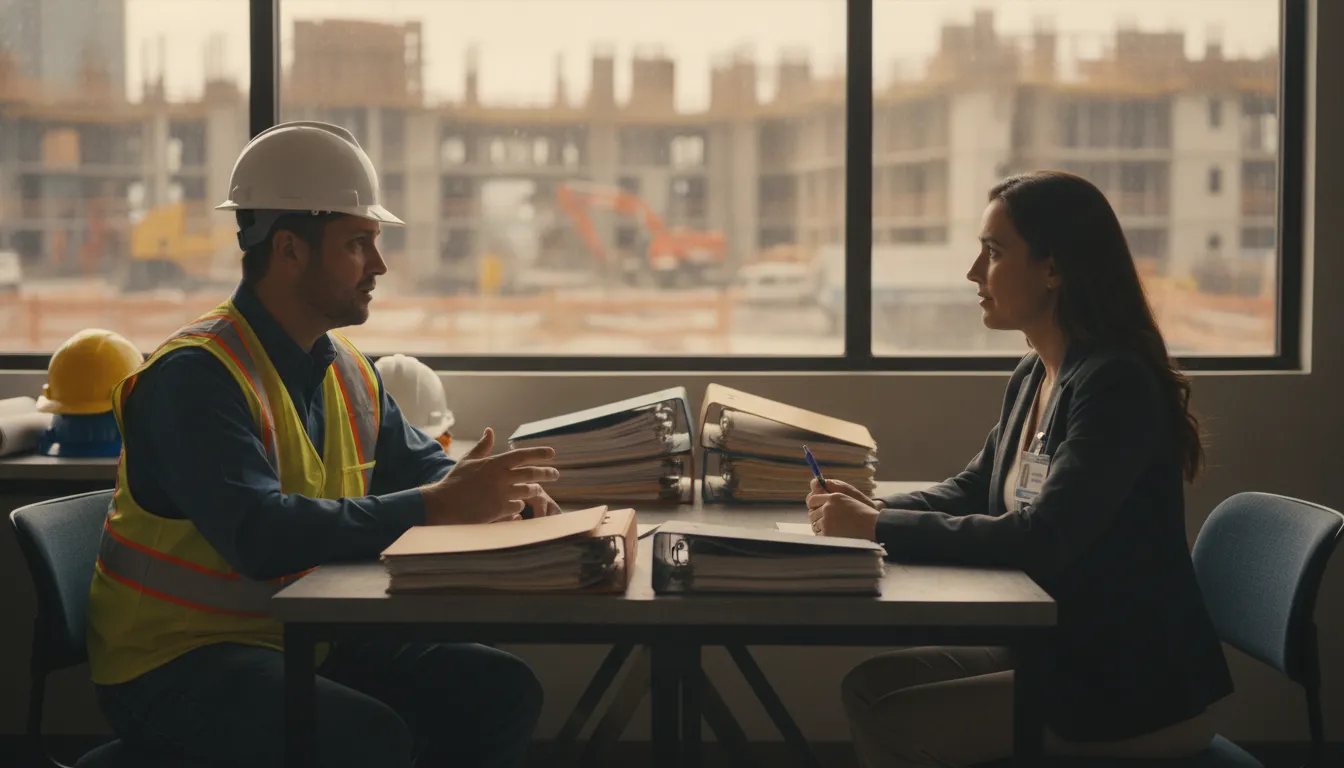
Unpaid progress payments rarely become easier to recover with age. For California contractors, subcontractors, trades, and suppliers, the decision to escalate depends on more than a calendar. Silence after repeated demands, delayed retainage, a disputed change order, or cash flow pressure can signal that internal follow-up has reached its limit.
In practical terms, consider when to hire a construction collection agency when an account is materially overdue. Your payment demands go unanswered, the dispute is becoming more complex, or waiting could put payment remedies at risk. Early review can help clarify the account, protect available options, and support firm recovery without needlessly damaging a valuable project relationship.
Kore United serves California’s construction industry exclusively, reviewing the invoices, contracts, payment schedules, and account records before developing a strategy. The first question is not whether to pressure a customer, but whether continued internal chasing is still producing progress.
Signs It Is Time to Stop Chasing Internally
Construction payment problems rarely begin with a dramatic refusal to pay. More often, the account drifts through another promise, another unanswered email, and another week added to the aging report. The question is not whether you can send one more message. It is whether continued internal chasing is protecting the relationship and improving the payment outlook, or simply consuming time while the account becomes harder to resolve.
Kore United identifies several common engagement signals for California construction clients, including overdue payments, delayed retainage, repeated unanswered demands, disputed change orders, and cash-flow pressure. These are decision points, not rigid rules. The right response depends on the contract, documentation, payment chain, and the nature of the dispute.
The debtor has stopped responding
A missed reply can be routine. A pattern of silence is different. If the accounts-payable contact, project manager, or owner has ignored repeated professional demands, internal follow-up may no longer be moving the account forward. An unreachable debtor is an especially clear escalation signal. Construction collection guidance also identifies situations where a client cuts off contact entirely as a reason to seek outside help.
- Payment promises pass without a new payment or credible explanation.
- Multiple contacts and channels produce no meaningful response.
- The debtor stops providing information needed to reconcile the balance.
The balance is tied to a dispute
Disputed change orders, retainage, and disputed invoices require more than a repeated request for payment. They can involve scope, authorization, project records, and responsibility across several parties in the payment chain. Continuing to press informally without a defined strategy can harden positions. A construction-focused review can separate a documentation issue from a genuine good-faith dispute and identify whether professional outreach, a formal demand, legal coordination, or another path is appropriate.
Your team no longer has the capacity to pursue it well
Internal collection is often assigned to someone already managing billing, project closeout, payroll, or new bids. Short staffing and a high volume of unpaid accounts are recognized reasons to consider external collection support. When several clients are late at once, the problem is no longer one difficult account. It is a portfolio competing with the work that keeps the business operating.
- Staff are spending project or accounting time repeating follow-up.
- Late accounts are accumulating faster than the team can review them.
- Important records, deadlines, or next actions are difficult to track consistently.
Cash flow or the client relationship is under pressure
Waiting becomes more consequential when unpaid work affects payroll, subcontractor obligations, bidding, or project funding. At the same time, a contractor may want recovery without turning a valuable owner or general-contractor relationship into a personal confrontation. Using a specialist creates separation and brings a more structured, relationship-conscious voice to the account. The goal is firm recovery, not unnecessary escalation.
If several of these signs are present, that is usually the point to stop improvising internally and have the account assessed by a California construction collection specialist.
How Many Days Past Due Is Too Long to Wait?
There is no universal day count that makes every construction account ready for collection. The right timing depends on the contract, payment history, reason for the delay, payment-chain parties, and approaching California deadlines. Still, 45 to 60 or more days overdue is a practical engagement signal, especially with delayed retainage, unanswered demands, a disputed change order, or mounting cash-flow pressure.
That signal is not a legal deadline. It is a point at which continued internal follow-up may be costing more than it produces. Bringing in a construction collection specialist earlier can help preserve documentation, clarify the payment issue. And create a measured escalation plan while the working relationship still has room to recover.
The 30-day rule does not apply to every construction claimant
California law provides a specific prompt-payment rule for direct contractors. After a contract-compliant demand for payment, an owner generally must pay an undisputed progress payment within 30 days. The statute also recognizes a good-faith dispute. In that situation, the owner may withhold up to 150 percent of the disputed amount. So the existence of a dispute does not automatically mean that every withheld dollar is wrongful.
For direct contractors, a violation may expose the owner to a 2 percent monthly penalty on the amount wrongfully withheld. An action to recover that amount may also allow the prevailing party to seek costs and reasonable attorney fees. Those consequences make the nature of the dispute, the contract language, the demand, and the supporting records important. They do not turn a collection article into individualized legal advice. A qualified professional should evaluate the facts of a specific account.
Other participants, including subcontractors, trades, suppliers, and laborers, may face different payment-chain issues and statutory considerations. Waiting for a rigid number of days can therefore be risky. If an account is approaching the 45- to 60-day range, the debtor has stopped responding. Or a payment explanation keeps changing, review the file rather than simply sending another reminder. Kore United’s notice compliance and mechanics lien services can be part of that broader timing review. The goal is a firm, relationship-aware next step before aging, missing records, or compressed options make recovery harder.
When Self-Collection Costs More Than the Debt
The balance on an unpaid construction account is only part of its cost. Every follow-up call, revised statement, contract review, and escalation decision pulls an owner, controller, CFO, or project manager away from work that keeps the business moving. For a California construction company, that distraction can affect payroll planning, subcontractor obligations, bidding, and the ability to fund the next project.
Self-collection becomes especially expensive when the account is aging without a clear decision. A single overdue invoice may be manageable. A portfolio of late payments from several clients requires consistent documentation, prioritization, and follow-through. Construction collection research identifies short staffing, high volumes of unpaid accounts, and complicated delinquencies as reasons to consider outside support. Those pressures are common when the same people responsible for operations are also chasing receivables.
| Consideration | Internal-only effort | Construction-specialist support |
|---|---|---|
| Owner or CFO time | Leadership repeatedly tracks promises, disputes, and unanswered messages. | Leadership receives oversight while recovery activity is handled externally. |
| Account volume | Each late account competes with active projects and current billing. | Accounts can be organized, reviewed, and pursued through a consistent process. |
| Documentation | Invoices, contracts, payment schedules, and communications may remain scattered. | The account file is reviewed before a recovery strategy is created. |
| Customer relationship | Repeated personal demands can make a project relationship more adversarial. | Professional outreach creates distance while preserving a measured path to escalation. |
The goal is not to turn every late payment into a legal fight. It is to stop allowing uncertainty to consume internal capacity. A construction specialist can review the invoices, payment schedules, contracts, and account documentation, then use professional phone and email outreach or a formal demand when appropriate. Kore United describes its model as contingency-based, with no upfront fees for most accounts, so the service is aligned with recovery rather than adding another immediate expense. Review the service approach before an aging account becomes an operations problem.
For owners and financial decision-makers, the practical question is not only whether the debt is collectible. It is when to hire a construction collection agency so internal staff can protect cash flow, serve current projects, and maintain important California construction relationships.
How Approaching Lien Deadlines Changes the Math
A past-due account is not only a collections problem when California payment-rights deadlines are approaching. It may also be a timing problem. Waiting can narrow the options available to a contractor, subcontractor, supplier, or other participant in the payment chain, even when the underlying work and balance are well documented.
Preliminary notice is part of the rights analysis
California law generally requires a preliminary notice before a claimant can pursue a mechanics lien, stop payment notice, or payment bond claim, although exceptions apply. The notice is not a substitute for collection work, and sending one does not guarantee payment. It is a threshold compliance issue that can affect whether later remedies are valid.
That is why a payment dispute should be reviewed as soon as the account shows signs of trouble, rather than held until every informal demand has failed. A professional review can examine the parties, contract position, project records, and notices together. Kore United’s notice compliance and mechanics lien services are designed for this kind of construction-specific evaluation.
The deadline may arrive before the dispute feels urgent
For a non-direct claimant, one mechanics lien deadline is generally 90 days after completion of the work. If the owner records a notice of completion or cessation, another deadline can apply: the lien must generally be recorded within 30 days after that notice. The applicable deadline is typically the earlier of those two periods.
Those rules make project status and recorded owner notices important. A claimant may still be negotiating a disputed change order, waiting on retainage, or trying to preserve a working relationship when the clock continues to run. A direct contractor’s situation can follow different rules, so the deadline should not be assumed from another party’s experience.
For a plain-language overview of the notice issue, review the article on California preliminary notice requirements. It should be treated as general information, not individualized legal advice or a complete filing guide.
Earlier review preserves more informed choices
When a deadline is close, the question is no longer simply whether to send another email. The practical decision may involve coordinated collection outreach, documentation review, notice compliance, a payment bond or stop payment notice analysis, or legal coordination. Those paths depend on the claimant’s role and the project’s facts. They also require enough time to identify gaps before an option expires.
Professional review does not mean abandoning the relationship. It can create a clear, measured escalation plan that protects the contractor’s interests while leaving room for a commercial resolution. If a California construction account is aging and a lien-related deadline may be approaching, review the options before the calendar removes them.
What to Do Before You Call a Collection Agency
A collection agency can assess an account more effectively when the payment history is organized. You do not need to build a complete legal case before asking for help. You do need to provide enough context to distinguish an unpaid invoice from a disputed change order, a retainage delay, or a broader payment-chain problem. That distinction shapes the next conversation and helps keep recovery action focused and professional.
- Gather the invoices and account ledger. Include each unpaid invoice, the amount originally billed, the amount received, the balance remaining, and the date payment became due. If the account includes progress billings, retainage, approved change orders, or credits, separate those items rather than combining them into one unexplained total.
- Provide the governing contract and amendments. Share the signed construction contract, purchase order, subcontract, change orders, and any written modifications that affect scope or payment. Identify the parties involved and your position in the payment chain, whether you are a prime contractor, subcontractor, supplier, trade, or another construction professional.
- Map the payment schedule. Note scheduled billing dates, due dates, payment applications, partial payments, retainage terms, and the last date anyone acknowledged the balance. A simple timeline helps separate an account that is newly late from one that has remained unresolved through several billing cycles.
- Save the communications history. Collect emails, letters, text messages, call notes, meeting summaries, and prior demands. Include both your requests for payment and the debtor’s responses, including promises to pay, requests for backup, silence, or explanations for withholding funds. This record helps support firm outreach without forcing you to repeat every conversation from memory.
- Identify notices and payment-rights documents. Include copies of any preliminary notice, lien-related correspondence, payment bond information, notice of completion or cessation, and other project notices you sent or received. Do not assume that locating a document proves a legal right remains available. The purpose is to help the agency evaluate timing and determine whether legal coordination is appropriate.
- Write down the dispute facts plainly. State what the other party says is wrong, if anything. Flag defective-work allegations, disputed quantities, unapproved change orders, back charges, offset claims, warranty issues, or a disagreement about who owes the money. Avoid argumentative summaries. Dates, documents, and specific amounts are more useful than conclusions.
Kore United reviews invoices, payment schedules, contracts, and account documentation before creating a recovery strategy. Its process can include professional phone and email outreach, formal demand notices, and escalation or legal referral when appropriate. For a practical overview of preparing a demand, see this contractor debt collection letter guide. The goal is not to hand you a do-it-yourself collection script. It is to make the account review faster, clearer, and better suited to the realities of California construction payment disputes.
How to Know When to Hire a Construction Collection Agency
When deciding when to hire a construction collection agency, evaluate more than whether the firm can make a demand for payment. The right partner should understand the project, the payment chain, the commercial relationship, and the California-specific options that may be relevant to the account.
Construction knowledge, not general debt collection
Construction receivables rarely involve a simple buyer-and-seller relationship. A balance may involve progress payments, retainage, change orders, a direct contractor, several subcontracting tiers, or a payment bond. Mechanics liens and bonding requirements can also affect how a claim should be evaluated. Choose an agency that regularly works with these construction-specific issues, rather than one that treats a trade account like ordinary consumer or commercial debt. Industry guidance identifies construction experience as a central selection factor.
California familiarity matters just as much. A California general contractor, specialty subcontractor, supplier, laborer, or design professional needs a team that recognizes how the claimant’s role. Contract documents, notices, and payment chain shape the recovery strategy. Kore United is headquartered in Irvine and serves construction clients statewide, including prime contractors, specialty subcontractors, tradespeople, suppliers, laborers, architects, and construction financial decision-makers.
Legal coordination without abandoning the business relationship
A capable agency should know when an account calls for ordinary outreach, a formal demand, escalation, or coordination with a construction law firm. That does not mean leading with the most aggressive action in every case. The agency should review the invoices, contract, payment schedule, communications, and account documentation before recommending a path. This helps separate a documentation issue from a genuine dispute and keeps the response proportionate.
Ask how the firm communicates with debtors. Firm collection work can still be professional, accurate, and respectful of the relationships contractors depend on for future projects. A construction-focused approach should pursue payment through appropriate legal channels while preserving business relationships. Relationship-preserving collection practices should be part of the conversation before you assign an account.
Transparent economics and dependable reporting
Fee structure and communication practices deserve direct questions. Kore United describes a contingency-based model with no upfront fees for most accounts, without requiring clients to pay a fee before recovery work begins. Confirm how your specific account will be handled, what happens if legal coordination becomes appropriate, and which decisions remain with you.
Finally, look for visible ownership after the account is submitted. Kore United reports targeted initial outreach within 24 to 48 hours and provides progress oversight with real-time updates during recovery. No timeline guarantees a result, but regular reporting should make clear what action was taken, what response was received, and what decision comes next. You Did the Work. Now Get Paid. Choose a specialist that can pursue that objective with construction fluency, legal awareness, commercial judgment, and accountable communication.
Frequently Asked Questions
Is it worth hiring a construction collection agency?
It can be, especially when an account is materially overdue, internal demands have gone unanswered. A change-order dispute is delaying payment, or the balance is affecting payroll and project cash flow. A construction specialist can organize the account, communicate firmly without needlessly damaging the business relationship, and identify whether collection, notice, lien, bond, or legal coordination should be considered. The right decision depends on the documentation, payment chain, and available remedies.
How much does it cost to hire a construction collection agency?
Kore United uses a contingency-based model with no upfront fees for most accounts. The specific arrangement depends on the account and should be confirmed before engagement. Ask what services are included, how escalation is handled, what happens if legal coordination becomes necessary, and when you will receive progress updates.
When should a contractor contact an agency about an overdue payment?
Do not wait for a universal day count. Typical triggers include an account that is 45 to 60 or more days overdue, delayed retainage, repeated unanswered demands, a disputed change order, or rising cash-flow pressure. California deadlines may make earlier review important. For example. A non-direct contractor’s mechanics lien deadline can be the earlier of 90 days after completion or 30 days after an owner records a notice of completion or cessation. See California Civil Code Section 8414: https://leginfo.legislature.ca.gov/faces/codes_displaySection.xhtml?lawCode=CIV§ionNum=8414.
Will using an agency damage my relationship with the owner or general contractor?
Not necessarily. A professional construction collection process can separate payment recovery from personal negotiations and keep communications documented, factual, and proportionate. Tell the agency which relationships matter, what has already been discussed, and whether the dispute involves defective work, retainage, a change order, or another issue. That context helps shape an escalation strategy that protects legitimate business relationships while addressing the unpaid account.
Ready to Submit Your California Construction Account?
If an account has moved beyond routine follow-up, a focused review can help clarify the next recovery step while keeping communication professional. Kore United works with California contractors, subcontractors, suppliers, and other construction businesses seeking payment recovery. To submit your California construction account for professional review and start the recovery conversation, Submit Account.